How Art in Hospitals Helps Patients Heal and Recover
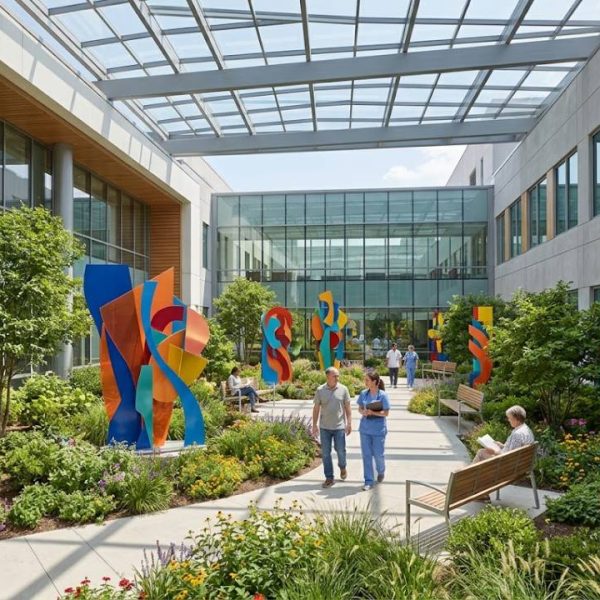
Walk into a modern children's hospital and you may not feel like you are in a hospital at all. Corridors are painted with forests and oceans, waiting rooms have aquariums, and a musician might be playing softly in the atrium. These are not decorations added at the last minute. They are part of a growing movement that treats art as a real contributor to health.
Healing spaces are built on a simple idea: the environment around a patient affects how they feel, how they cope and sometimes how quickly they recover.
What the evidence says
In 2019, the World Health Organization published a major review of more than 3,000 studies on the role of the arts in health. It found evidence that arts activities can help prevent illness, support treatment and improve wellbeing across the life course. Music, visual art, dance, theatre and creative writing were all linked to benefits ranging from reduced anxiety to better management of chronic conditions.
Earlier research had already pointed in this direction. A widely cited study in the 1980s found that surgical patients with a window view of trees had shorter hospital stays and needed fewer strong painkillers than patients facing a brick wall. Since then, architects and clinicians have explored how light, nature, colour and art can shape patient experience.
Forms of art in healthcare
Visual art and murals
Paintings, photographs and murals transform clinical spaces. Nature scenes and calm abstract works are especially popular, as studies suggest they reduce stress more than busy or disturbing images. Many hospitals curate collections specifically for this purpose and rotate works regularly.
Music
Live and recorded music is used in intensive care units, neonatal wards, dementia care and palliative care. Music therapists work with patients to manage pain, anxiety and mood. In some hospitals, musicians perform in public spaces to create a calmer atmosphere for patients, visitors and staff.
Participatory arts
Painting workshops, singing groups and creative writing sessions give patients an active role. For people with long-term illnesses, these activities offer social connection, a sense of control and a break from the identity of being a patient.
Gardens and architecture
Healing gardens, natural materials, daylight and views of greenery are now standard features in many new hospital designs. They benefit staff as much as patients, offering spaces to recover from stressful shifts.
Art therapy and trauma
Art therapy is a recognised clinical discipline in which trained therapists use creative processes to help people express emotions they cannot easily put into words. It is widely used with children, people with mental health conditions and survivors of trauma.
Since 2022, art therapists across Europe have worked with Ukrainian refugees, many of them children who have experienced displacement and loss. Programmes often combine art therapy with language support. Clinics and charities preparing consent forms, parent information and session materials frequently rely on an accurate english ukrainian translation so families understand what therapy involves and feel safe taking part.
Learning from France
France has a strong tradition of culture in hospitals, supported by national programmes that bring artists into healthcare settings. French hospitals host artist residencies, theatre performances and exhibitions, and researchers publish evaluations of these initiatives. For international teams studying or replicating these models, professional french to english translation services open access to reports, evaluation tools and project descriptions that are often only available in French.
Making healing spaces inclusive
A healing environment should welcome everyone, including patients who do not speak the local language. Signage, information leaflets, digital screens and audio guides for art collections increasingly appear in several languages. Hospitals serving diverse communities, such as those in London, Berlin or Toronto, may need content in a dozen languages or more.
Keeping all of that content accurate and up to date is a challenge. Some hospital networks now manage their multilingual patient information through a central translation platform online, so that a change to visiting hours or an exhibition description is updated in every language at once.
In hospitals serving diverse communities, professional medical translation services ensure patients understand their care. From consent forms to discharge instructions, accurate translation protects patient safety and legal compliance. Qualified medical linguists understand clinical terminology and cultural sensitivities. Clear communication in a patient's own language builds trust and improves outcomes.
Benefits for staff
Healthcare workers face high levels of stress and burnout. Art programmes, quiet rooms with calming design and staff choirs or art clubs can support their wellbeing too. Several hospitals report that staff value these spaces as much as patients do. A healing environment heals the people who work in it as well.
Challenges and criticism
Not everyone is convinced. Critics point out that funding for art can seem hard to justify when hospitals face staff shortages and long waiting lists. Some studies in the field are small or lack rigorous controls. Researchers are working to strengthen the evidence base with larger trials and clearer outcome measures.
Supporters respond that many arts interventions are low-cost, that patient experience matters in itself, and that reduced anxiety or shorter stays can save money in the long run.
Principles of good healing design
- Bring in daylight and views of nature wherever possible.
- Choose art with input from patients, staff and art therapists.
- Offer opportunities for active participation, not just viewing.
- Make information accessible in the languages of the local community.
- Evaluate programmes so their impact can be measured and improved.
Where science and art meet
Healing spaces are where neuroscience, psychology, architecture, medicine and art come together. They remind us that health is not only about treating disease but about caring for the whole person. A painting, a song or a garden cannot replace medicine, but they can make the journey through illness more human.